
FVTV original music industry interview ·
Raymon Phillips Spent 45 Years Behind the Music. He Still Wants Artists to Find Their Own Sound.
In an original FVTV Media conversation, the Cleveland-based RFactor Productions founder traces his path from Karamu House theater and the Kinsman Dazz Band to artist development, Southern soul, live shows and the rise of AI.
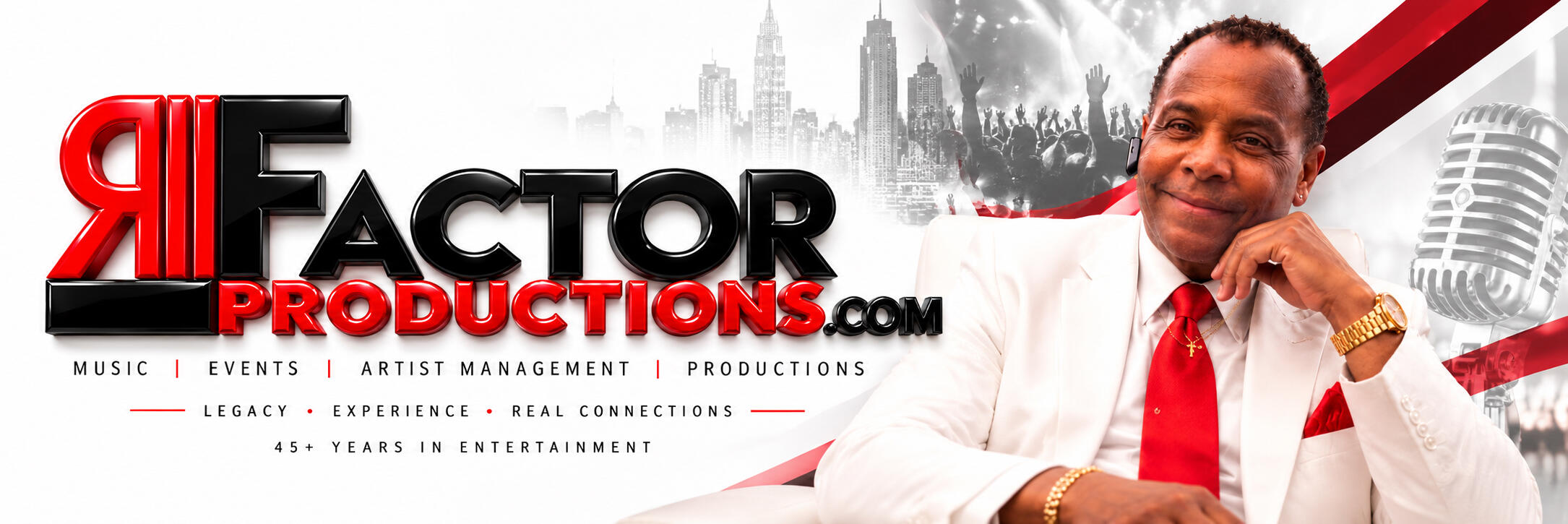
Raymon Phillips has been in the entertainment business long enough to remember when an artist had to get past radio gatekeepers just to be heard. He is not convinced that easier access has made building a lasting career easier. In a wide-ranging original FVTV interview, the founder of RFactor Productions argues that a musician still has to know what makes the music feel like their own.
Phillips places his experience at roughly 45 years. His work has crossed artist management, concert production, bookings and talent development. The story he tells starts in Cleveland, not in a record-company office, and takes in changing R&B sounds, Southern soul, blues and a music industry trying to decide how artificial intelligence fits into the creative process.
What connects those subjects is an unusually practical question: how does an artist get people to care about a song and keep caring about the person who made it?
He learned the business backstage
Phillips traces his introduction to live entertainment to high school theater and work around Cleveland's Karamu House. While helping with a production of “The Wiz,” he impressed a singer who invited him to rehearsal with her group. The ensemble needed help, and he started on the road crew before stepping into management.
His interest had started even earlier. Phillips remembers his mother working in a record store and bringing home records early enough that the family's stereo became a gathering spot for neighborhood children. The combination of hearing new music and learning how shows are run shaped the two sides of his career.
Those early jobs taught him that an audience sees only the finished performance. Someone still has to coordinate the rehearsal, the road work and the performers so the moment can happen.
Cleveland gave him an education in R&B
Phillips remembers a Cleveland scene where groups learned by rehearsing close to one another and sharing stage experience. He talks about working around the Kinsman Dazz Band as its musicians built their own national audience, and recalls the exchange of practical advice between bands that were still figuring out touring.
He also discusses sharing a stage with more established performers and learning how a star's reassurance could change the atmosphere backstage. The larger lesson was that a memorable show comes from preparation and the relationship between the people onstage and the people watching.
His company's present-day artist roster, as presented on the official RFactor Productions website, includes the Kinsman Dazz Band, Jaysin Voxx, Bluesmaster Mike and Chris KNITE. Phillips's interview describes how that older performance tradition influences his work with younger artists.
Artist development starts with identity
The RFactor founder makes a distinction between putting a finished record into the marketplace and helping a musician discover what should go into the record in the first place. When FVTV asks about RFactor's relationship with the World Movement Records network, he describes the two companies as working on different parts of an artist's career.
Phillips's interest is in the earlier stage: whether a singer's strengths belong closer to pop, R&B or another sound, and what the artist needs to learn to communicate that sound convincingly. In discussing younger performer Jaysin Voxx, he emphasizes musical feeling, preparation and the ability to connect personally with an audience.
His advice for stage anxiety is similarly hands-on. Repeatedly performing in unfamiliar situations can make a musician less afraid of the room. Once the performer invites an audience into the experience, he says, the reaction can turn nervousness into energy.
Blues and Southern soul can find the same audience
When the interview turns to Bluesmaster Mike, Phillips argues that the economics of blues and Southern soul do not have to be viewed as two entirely separate markets. He talks about building around an existing audience, finding stylistic overlap and offering listeners a compelling first record that makes them curious about whatever comes next.
He also remembers producing a Roger Troutman show in difficult winter weather. The decision to play despite a storm left him with a lesson about commitment: audiences who come out deserve the full performance, regardless of the size of the room.
His reservation about AI is the missing human feeling
Phillips has strong views about AI-generated music, but they are more nuanced than a blanket rejection of new tools. He says a system may be useful for showing a songwriter a possible arrangement or helping someone communicate an idea to musicians. His concern is what gets lost if the entire performance is reduced to an automated production.
In the interview, he stresses the slight imperfections and human decisions that make an R&B or funk record emotionally convincing. These are Phillips's aesthetic judgments, rather than a technical claim that listeners can always distinguish human-made music from AI.
He also describes an upcoming Bluesmaster Mike video project that experiments with animated, AI-assisted visuals while keeping its music made by human performers. The separation matters to him: he wants visual experimentation to complement musicianship, not replace it.
The career lesson is still about work
Phillips ends the conversation by returning to the demands of a serious career. Reaching an audience requires knowing who the artist is, taking feedback and putting in work beyond recording a single track. His memories of earlier generations are a reminder that discoverability and lasting connection are different problems.
RFactor Productions handles management, bookings and production work. The company's official website is the current source for its roster and professional contacts; individual social profiles have not been attributed to Phillips without verification.