
FVTV original artist interview ·
Austin Je Changed His Name to Tell the Truth. He Wants Indianapolis to Build Something Bigger.
The Indiana songwriter and producer tells FVTV why he retired the Jeremiah Stokes persona, how rock and hip-hop shaped his sound, and why local musicians need venues, booking agents and business infrastructure.
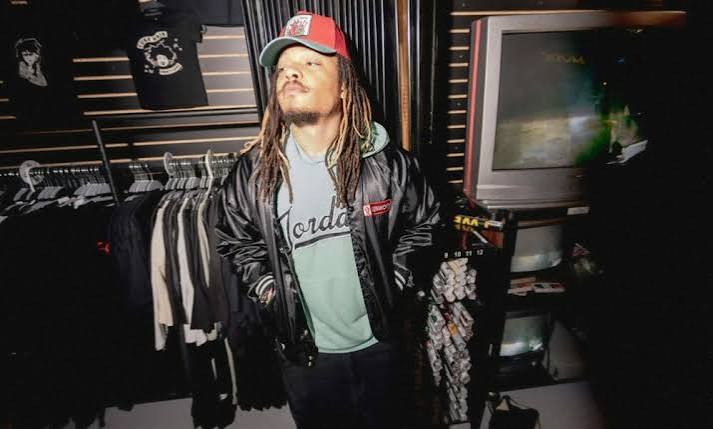
Austin Je could have kept releasing music as Jeremiah Stokes. By his account, that name already had listeners and a history. But in his recorded FVTV interview, the Indiana artist says he had started to feel like he was telling his own story while hiding behind somebody else's persona.
His solution was to adopt a version of his real first and middle names. Austin Je describes the change as part of growing up, deciding who gets access to his time and learning to approach music more deliberately. The artist who made that decision is also a songwriter, singer, rapper, producer, vocal director and mentor.
The name change is only the beginning of the conversation. Austin argues that Indianapolis has plenty of talented artists but needs more of the practical infrastructure that helps independent musicians operate as businesses. His own influences stretch between hip-hop, rock and music made outside the United States, showing why a rigid idea of a local scene never quite fit him.
A name he could actually stand behind
Austin explains that the earlier Jeremiah Stokes artist identity had become a separate persona. He liked parts of it but felt that releasing personal music under another character created an unnecessary distance between him and the people listening. He wanted the person describing those experiences in songs to be the same person who stood behind them in life.
He tells FVTV he chose the name Austin Je from his real first and middle names, shortening the spelling of the middle name to make it easier to remember. He describes the decision as a conscious effort to move forward from some of the people, scenes and habits he associated with his younger years.
The change also affected how he works. Austin talks about being more selective with the people invited to his recording sessions and about taking responsibility for the environments he chooses. The goal wasn't to deny the earlier music; it was to put the next part of his story in the right voice.
Indiana artists don't need another lecture about talent
Austin identifies with both the 219 and 317 Indiana area codes and spent formative years in Indianapolis. He remembers helping to build community through local shows and creative networks, while also finding that many circles tended to work within their own groups instead of pooling resources.
His criticism of the local industry is specific. He says Indianapolis needs more professional venues, booking agents, experienced promoters, legal support and business-minded executives. The problem, as he sees it, isn't a shortage of rappers or producers. It is a shortage of the systems that make it practical for musicians to earn a living and reach listeners.
He argues that artists have more bargaining power when they coordinate rather than treating other local acts as rivals. Even performers who do not share a sound, he suggests, could benefit from working together around stages, events and business resources. Those are the changes he wants to see alongside the songs themselves.
The music isn't staying inside one genre
Austin describes drawing inspiration from alternative rock and hip-hop alike. He names artists such as Chester Bennington and Mike Shinoda when explaining how powerful vocals and unusual production helped him put difficult feelings into words. As he got older, he explored more rock, jazz and R&B while keeping rap central to his work.
He says his taste affected his production decisions. Rather than choosing the most obvious instrumental for a rapper, he gravitates toward beats that might initially sound unfamiliar but leave room for creative interpretation. He cites Kendrick Lamar's willingness to use unusual instrumentals as one influence on that approach.
In the interview, Austin also talks about studying languages. He describes speaking conversational Spanish, understanding some Japanese and studying Portuguese ahead of travel to Brazil. He says he was collaborating with a Brazilian producer and could imagine records in other languages. Those were works in progress when the interview was recorded, not finished releases FVTV is claiming already exist.
He sees a city with a longer musical history
Austin is proud of Indiana's musical heritage. He talks about the jazz musicians and venues that helped shape the state, mentioning the importance of remembering that history when people discuss the modern music business.
Some of his comments about Indianapolis politics, commercial development and historical discrimination reflect his personal interpretation of the city's history. FVTV presents them as the artist's views, not as independently verified findings about named companies, government officials or venue owners.
His central point is constructive: the next wave of independent artists should have somewhere to perform, people who understand contracts and touring, and a scene capable of supporting its own careers. The success of one musician doesn't automatically build those conditions for everyone else.
Independence requires more than being good at music
Austin's career crosses roles that usually sit on separate lines of a project budget. Alongside writing and recording, he discusses producing, vocal direction, creative development and helping other artists. He treats those skills as a way to participate in the whole process rather than simply arriving at the studio to perform a verse.
That is also the thread connecting the old name, the new name and his view of Indianapolis. Austin wants an artist to control more of the work, understand the business and build a group of collaborators who can sustain it. The question behind his interview is how to create that kind of independence without losing the personality that made the music worth hearing in the first place.