
FVTV original artist interview ·
JDiggs Tha Prodigy Found His Voice Between Gospel, Fort Worth Rap and Hard Conversations.
In his original FVTV interview, JDiggs Tha Prodigy talks about the Kirk Franklin rehearsals of his childhood, a pivot toward Christian hip-hop, his Uncrowned King albums, the mental-health themes in Voices, and opening for Bone Thugs-n-Harmony.
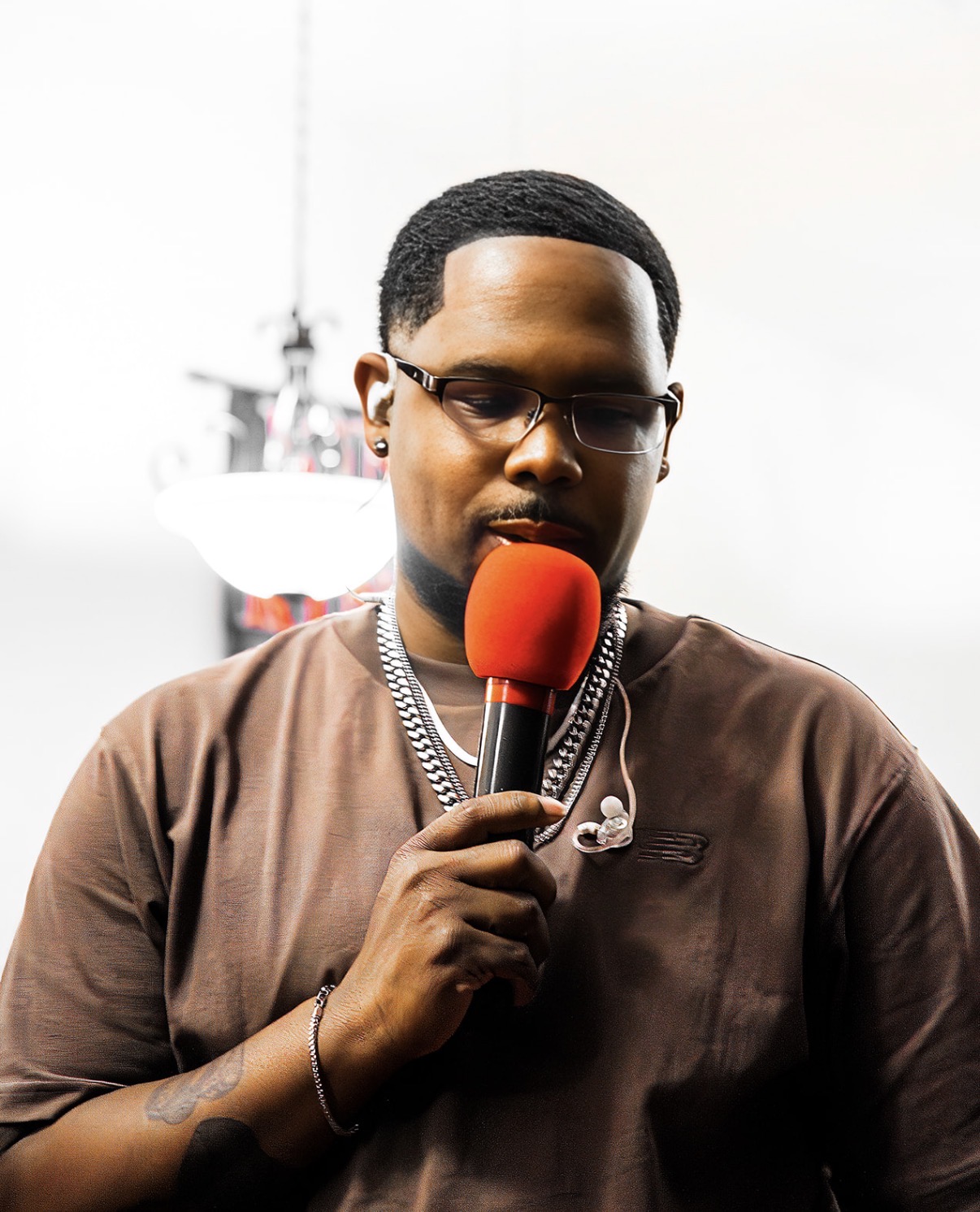
At four years old, JDiggs Tha Prodigy was photographed playing with a microphone at a gospel rehearsal. He tells FVTV that it was a Kirk Franklin rehearsal, not the start of his own recording career. The distinction matters to the Fort Worth artist: he grew up close to professional gospel music, but still had to figure out what kind of artist he wanted to become.
His father played hip-hop during the week. His grandmother and aunts put him around gospel music and church on weekends. That mixture continued into his own catalog, where he worked through rap, faith, the ambitions of his Uncrowned King projects and a more difficult question: what can an artist say about emotional pain without turning the subject into another performance?
In the original full-length conversation with FVTV, JDiggs traces those changes, discusses the independent-show circuit and talks about why his three-part Voices project meant more to some listeners than streaming numbers.
The microphone came before the career
JDiggs says his early musical world was split between the hip-hop his father played and the gospel music he heard with family and in the church choir. He remembers being present at rehearsals connected to major gospel performers, including Kirk Franklin, whom he describes as a family friend.
He is careful about the photo of himself with a microphone at four. He explains that he was playing with the microphone before rehearsal when someone took the picture. He says it was years later that he began making music seriously. Proximity to a celebrated performer gave him memories, but not an automatic career.
His own work eventually moved through music he chose for himself, material his father encouraged him to try and a church audience he did not initially set out to reach. These were different directions in one career rather than a single overnight reinvention.
The Christian rap pivot came in stages
Around eight minutes into the interview, JDiggs describes recording an early Christian rap song after his father, a pastor, requested it. He says he initially kept it on SoundCloud rather than building a public campaign around it, because he was pursuing other kinds of rap. That recording nevertheless drew more plays than many songs he actively promoted.
He recalls his father insisting that the response was a sign of what he should make. JDiggs was unconvinced. The next turning point came when an aunt asked him to record another faith-based song in 2024. He performed it at church services, then received invitations to play additional churches that paid him for his performance rather than asking him to sell a quota of tickets.
He argues that music rooted in faith does not have to abandon the production style people already enjoy. In his account, a song can carry a different message while still being rhythmically at home beside contemporary rap.
Why he called himself an Uncrowned King
The Uncrowned King trilogy begins with frustration over artists declaring themselves kings of their cities or genres. JDiggs remembers hearing competing claims to the same title and questioning what a crown meant when no one agreed on who deserved it.
He explains that he took the phrase Uncrowned King because he believed in his own abilities without expecting other rappers to grant him the title. He describes three connected projects released across the years, beginning in 2014 and reaching a final installment in 2024. To him, the sequence tracks both ambition and the changes in how he understood it.
The trilogy gives a different context to the later Christian rap work. He did not erase the career that came before his pivot; he carried parts of its musical identity and lessons into what he wanted to make next.
Voices was supposed to be one song
JDiggs speaks especially seriously about Voices, his project dealing with mental health and emotional distress. He tells FVTV that he initially planned a single song. People who connected with its subject asked what happened afterward, and he wrote another. Other listeners wanted the story to reach some kind of conclusion.
The result was a three-track project that took him years to complete. He describes hearing from people who recognized difficult experiences in the songs and wanted to know whether someone in that position could find support or a path forward. His account includes discussion of depression and suicide. He presents those experiences as reasons to have conversations about seeking help, not as dramatic details to celebrate.
He also discusses the expectations placed on rappers who address emotional pain. JDiggs does not think that speaking about mental health means an artist can only make that kind of music. He wants room to write about faith, relationships, live shows and the full range of life, without treating serious subjects as a branding lane.
Opening for Bone Thugs-n-Harmony was a lesson in preparation
JDiggs describes opening a performance for Bone Thugs-n-Harmony as both exciting and intimidating. These were artists he had grown up hearing, and taking the stage as part of the same show made him think more carefully about the standard he needed to meet.
He emphasizes rehearsals and the musicians working with him, including the experience of performing with a band. Later in the conversation he makes the practical argument that artists earning very little still need to practice if artists on major tours do. The preparation, not simply the name on the poster, is the part he wants younger performers to remember.
The Fort Worth artist also talks about the distance between Dallas and Houston as musical identities. He grew up around chopped-and-screwed records and says Dallas deserves recognition for more than one sound or one era of regional rap.
Chart screenshots, and what they actually prove
Near the later part of the interview, JDiggs recalls using an artist-statistics service to follow the reception of Father Forgive Me. He describes watching chart placements change in places including Indonesia and France and taking screenshots when he saw numbers that surprised him.
Those rankings are his account of what the analytics service displayed; FVTV has not independently confirmed the chart methodology or treated the screenshots as an official national chart. What matters to his story is his description of an independent artist checking to see where listeners might be finding the music.
That is where the interview returns to its beginning. JDiggs grew up surrounded by gospel music and listening to rap at home. Later, he kept making songs through different phases and audiences. He is still working out how the music can tell more of his story without asking him to leave the earlier chapters behind.