Album review · July 21, 2026
RICK ROSS’ SET IN STONE IS A STRONG ALBUM BURIED INSIDE AN OVERLONG ONE.
FVTV reviews and ranks all 19 songs, then finds the sharper 12-track album hiding inside the full project.
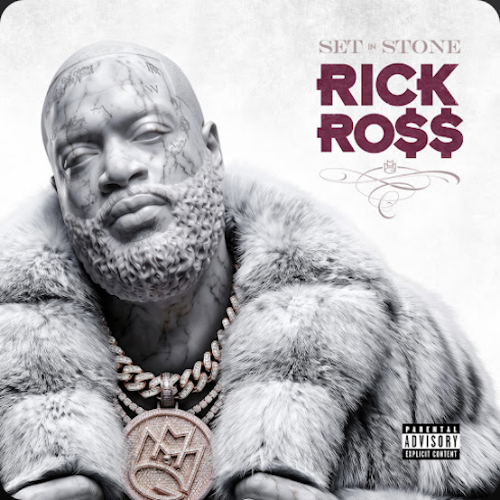
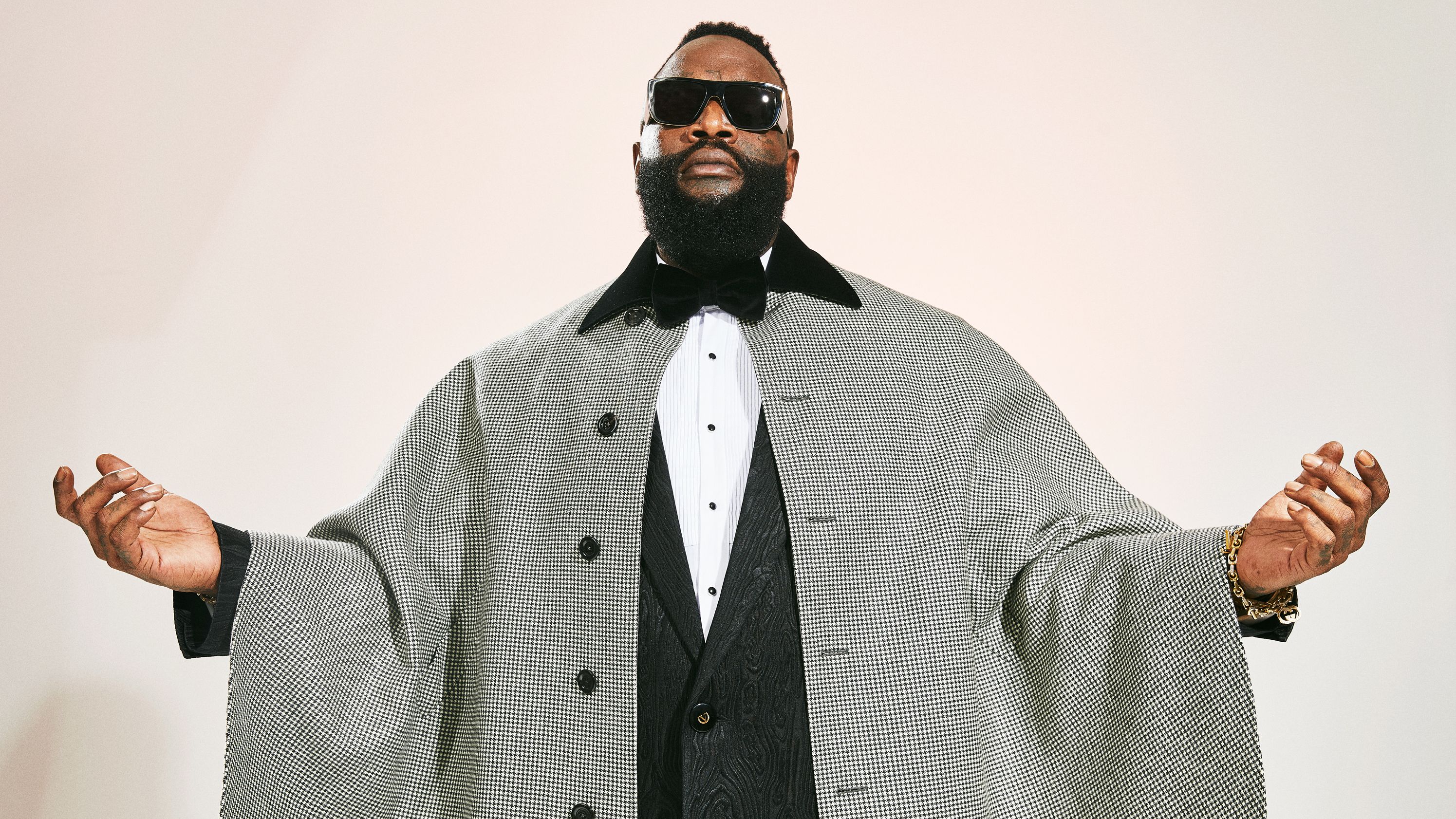
Rick Ross still sounds important when the production treats him like an important rapper.
That is the clearest conclusion after listening through Set In Stone, a 19-track album that contains some of Ross’ strongest luxury-rap records in years alongside several songs that would have been better left as bonus material. The album proves his voice, presence and ear for atmosphere remain intact. It also shows why a veteran artist with a fully established formula needs sharper editing more than additional features.
At his best, Ross occupies production instead of merely rapping over it. The drums move slowly. The samples breathe. The arrangements make room for his voice to sound like part of the architecture. On weaker songs, he compresses himself into faster streaming-era structures or hands too much of the record’s personality to the guest.
The result is a good album with an excellent shorter version hiding inside it.
The opening stretch establishes the album’s world
Caviar Bumps
The opener understands the assignment. “Caviar Bumps” gives Ross space, scale and a beat switch that lets the record gradually widen instead of entering at maximum volume. The imagery is classic Ross: Miami water, international movement, yachts and wealth rendered as scenery rather than a simple list of possessions.
The title sounds almost too perfectly Rick Ross, but the song works because he still knows how to make excess feel cinematic. It is a proper album opener and one of the project’s strongest solo performances.
Mahogany Caskets
featuring T.I.
The title suggests velvet-lined menace. The actual record is faster, more aggressive and more compressed than expected. Ross and T.I. approach it like a veteran sparring session, with T.I. bringing the sharper rhythmic attack.
Both rappers deliver, but the beat does not fully match the luxury and danger promised by the title. A collaboration called “Mahogany Caskets” should feel heavier and more expensive than this one does.
Minks In Miami
featuring French Montana and Max B
This is a polished lifestyle record built around chemistry and history. French Montana fits naturally into Ross’ world, while Max B gives the song its melodic identity and celebratory center.
Ross contributes effectively without controlling the entire record. It plays more like a reunion and campaign single than an essential album chapter, but it remains smooth and replayable.
Face Down
featuring Rich the Kid
“Face Down” is the first moment where Ross appears to move toward the guest’s lane instead of forcing the guest into his own universe. The production is dark, fast and trap-oriented. Rich the Kid brings energy, but the song lacks the grandeur that separates a strong Ross record from an interchangeable feature cut.
It works. It simply does not leave much behind after it ends.
Ring Around the Rolls
featuring YFN Lucci
The album regains emotional range here. YFN Lucci’s melodic delivery introduces struggle and relief into Ross’ luxury framing, turning success into something reached after pressure rather than a static display.
The production has enough movement to let the reflective passages and louder sections carry different weight. This is one of the better-balanced records on the album.
Camel Meat
featuring Deon Cole
“Camel Meat” is absurd in the exact way a memorable Rick Ross title should be. Deon Cole’s appearance turns the opening into a short comedy scene before Ross moves into international crime-boss imagery.
The record succeeds because it has personality. Even when the bars revisit familiar Ross territory, the framing gives the song an identity inside a crowded tracklist.
Maybach Music VII
featuring Jeezy and Don Toliver
This is the album’s centerpiece.
At nearly five minutes, “Maybach Music VII” has the patience and scale required of the series. Ross and Jeezy sound authoritative instead of hurried, and their shared history adds weight before either man begins rapping. Don Toliver modernizes the record without stripping away the expensive atmosphere that defines the franchise.
This is the clearest evidence on Set In Stone that Ross can still create a major rap moment. It is the best song on the album.
Living Large
featuring BigXthaPlug
The shortest and most compressed record in the opening half arrives loudly and exits before the collaboration can fully develop. BigXthaPlug’s heavy delivery fits the production naturally and may be the first voice listeners remember afterward.
It works as a playlist record, though it feels designed around BigX’s current momentum more than a particularly strong Ross concept.
Purple Fentanyl
One of the album’s strongest solo records. The darker production gives Ross a colder atmosphere, and the absence of a feature forces the song to depend on his voice and writing.
The title combines beauty, luxury and contamination in a way that matches the album’s larger tension between wealth and violence. More of the project should trust Ross to carry records alone.
#23
Basketball imagery becomes shorthand for competition, status and elimination. The structure is lean, the production stays out of Ross’ way and his delivery remains central.
The concept is effective, though the limited arrangement keeps it below the project’s biggest songs.
The middle exposes the album’s editing problem
Porsche GT3-RS
The biggest miss on the album. The title promises speed, engineering and luxury. The record feels flat and overcompressed, with little difference between its quieter and louder sections.
Ross connects sports-car flexing with survival and gratitude, but the presentation feels closer to a rough mixtape cut than the luxury centerpiece the title suggests.
City Lights
featuring The-Dream
“City Lights” immediately improves the album’s texture. The slower groove gives The-Dream enough room to turn it into a late-night Miami record, while Ross approaches romance through the same cinematic luxury lens he uses elsewhere.
The-Dream supplies the emotional center and keeps the song from becoming another inventory list of cars and jewelry. It is a clean, effective crossover record.
Chain of Command
featuring Nino Breeze and Big Tony
This sounds like a regional crew record placed inside a major album. Ross establishes hierarchy and authority, while the guests reinforce the street-network concept.
Nothing is technically wrong with it. The problem is distinction. On a shorter album, this likely becomes a bonus track.
Remarkable Hussle
featuring Leon Thomas
The album regains purpose here. Built around persistence, ownership and long-term vision, the record places Ross in a lane where his business talk sounds believable rather than ornamental.
Leon Thomas adds soul without overpowering the record, and the arrangement gives the message room to breathe. It could have gone deeper, but it remains one of the album’s more meaningful songs.
Big Fish
featuring Gucci Mane
Ross and Gucci Mane are natural collaborators. Both built careers around Southern authority, drug-kingpin mythology and making wealth part of the music’s visual design.
The song delivers exactly what the pairing suggests. It never reaches the memorable exchange their shared history should have produced.
The closing stretch saves the second half
Diamonds Never Die
featuring Kodak Black and Ball Greezy
The strongest song in the second half. At more than four minutes, it has enough time to establish atmosphere, rotate between three distinct voices and let the hook settle.
Ball Greezy is the surprise. His melodic contribution gives the record glue and personality. Ross supplies the polished boss perspective, while Kodak Black introduces rougher energy that keeps the song from becoming too clean.
The guests, hook, length and production all justify one another.
She’s My Star
featuring Yung Miami
The smoother production creates expectations the song never fully meets. At just over two minutes, the arrangement feels unfinished.
Ross enters his romantic-luxury lane and Yung Miami gives the record attitude, but the writing remains surface-level. This could have developed into a stronger successor to Ross’ classic melodic records. The streaming-era construction cuts it short.
Do It One Time
featuring Young Breed and DJ Nasty
A Miami homecoming record. Young Breed’s presence connects the album back to Ross’ Carol City and Triple C’s history, while DJ Nasty gives it local street-and-club energy.
Ross sounds comfortable because he is operating inside his own regional identity rather than chasing somebody else’s sound. Longtime listeners will appreciate it more than casual listeners.
The Algorithm
A surprisingly effective closer and one of the album’s strongest production choices.
The slow, darker atmosphere gives Ross an actual closing scene. He imagines leaving the noise of the world behind and escaping to Mars, creating a record that feels detached from the competition, narratives and systems surrounding the album.
After spending much of Set In Stone negotiating current sounds and younger guests, Ross ends by stepping outside that race entirely. The concept gives the album a more reflective ending than another feature-heavy flex would have.
Final ranking
- Maybach Music VII — 9.0
- Diamonds Never Die — 8.6
- The Algorithm — 8.5
- Caviar Bumps — 8.4
- Purple Fentanyl — 8.2
- Remarkable Hussle — 8.0
- Ring Around the Rolls — 8.0
- City Lights — 7.9
- #23 — 7.8
- Mahogany Caskets — 7.8
- Camel Meat — 7.7
- Minks In Miami — 7.5
- Living Large — 7.4
- Do It One Time — 7.4
- Big Fish — 7.2
- Face Down — 6.9
- She’s My Star — 6.6
- Chain of Command — 6.5
- Porsche GT3-RS — 5.8
The sharper 12-track version
A more disciplined version of Set In Stone would keep:
- Caviar Bumps
- Mahogany Caskets
- Ring Around the Rolls
- Camel Meat
- Maybach Music VII
- Purple Fentanyl
- #23
- City Lights
- Remarkable Hussle
- Diamonds Never Die
- Do It One Time
- The Algorithm
That version would preserve nearly everything the project does well while removing the songs that interrupt its momentum.
FVTV verdict
Set In Stone is a good Rick Ross album buried inside an overextended one.
Ross’ voice still carries authority. His strongest production instincts remain intact, and he can still turn wealth into scenery instead of ordinary bragging. The album weakens when it prioritizes feature volume, brief streaming-oriented structures or beats that do not give his delivery enough room.
The best songs prove the formula still works. The filler proves the formula needs stricter editing.
Disclosure: This is an independent FVTV editorial review based on the complete album supplied for review. No payment or promotional consideration influenced the rating.