First-person ·
NOT FOR SALE: Orthodox Tactics and the Cost of Conviction
A first-person essay on LOGOS, Byzantine music, family, faith and what the Athens artist refuses to trade for acceptance.
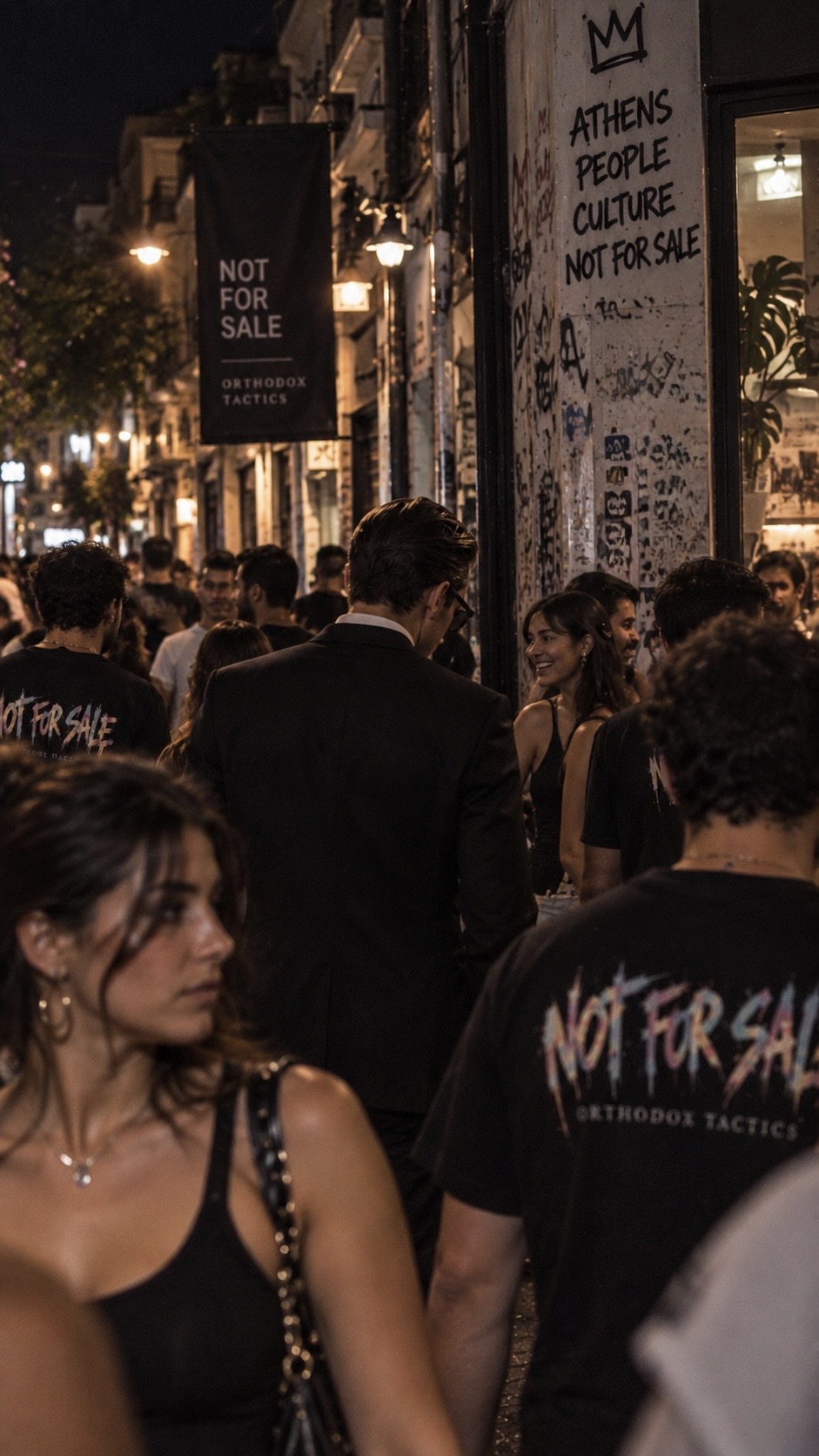
Every life is shaped by what it refuses to surrender.
For me, that question runs through three albums: KYRIE ELEISON, ETHOS and LOGOS. Their titles trace a path from a plea for mercy, to the formation of character, to the word made into action.
KYRIE ELEISON means "Lord, have mercy." It began with a simple recognition: we are not made whole by pride or self-sufficiency. We need mercy. The album grew from faith, family, tradition and the search for meaning beneath the noise of everyday life.
With ETHOS, the question became more demanding: when conviction is tested, what kind of person will you be? The ancient Greek word ethos speaks to character, the beliefs and values that shape a person or a people. I wanted the album to examine identity under pressure: integrity when unseen, strength without spectacle, faith translated into movement. Its sound brings elevated trap production into conversation with Greek roots and Orthodox spirit. Every word had to carry weight. Every sound had to serve a purpose.
Then came LOGOS, the continuation of that search. The ancient Greek word logos holds several meanings: "word," "reason" and "order." I wanted the album to bring those meanings into sound, to give voice to belief, seek meaning within experience and find a sense of order amid the noise.
I have made all three albums independently, without a label or outside backing. Each has demanded its own measure of faith, conviction and sacrifice, and LOGOS became the point where those years of work converged. I could have pursued a more familiar route. Instead, I chose to make music I hope to share with my children one day, music that seeks meaning and leaves room for faith, family, honour, tradition, culture and heritage.
My background in Byzantine music has shaped how I understand that responsibility. I hold a teaching degree in Byzantine music and have served as a Greek Orthodox chanter since childhood. That tradition taught me that sound can carry memory across generations, and that music can be more than entertainment. It can become a vessel for reverence, grief, hope and belonging.
Those ideas eventually moved beyond the albums and into a visual campaign: NOT FOR SALE. It grew from a question at the heart of this work: what is worth keeping when acceptance comes at a price? The campaign carries that question into a series of short films, with its first two chapters tracing a movement from recognition to refusal.
The campaign takes its name from "Not for Sale," a song on ETHOS. In the song, I draw a line around what cannot be traded: purpose cannot be bought, loyalty cannot be rented and faith cannot be rebranded. That conviction became the seed of the campaign, a question carried from the album into a visual story: what is worth keeping when acceptance comes at a price?
The first film opens with the Greek phrase meaning "You're not the only one." The second moves from an offer in an Athens cafe to a refusal, then back to the studio. It ends with a phrase that translates to "Don't sell yourself to be accepted." Together, the films give the song's conviction a human shape: the quiet instant when acceptance has a price, and a person decides what they will keep.
The campaign is still unfolding. More short films may follow, extending its story through new situations and visual symbols. Merchandise may become part of that world too, tangible reminders of the message and the values behind it. Each new chapter will return to the same question of what we choose to preserve.
The films tell their story through gestures, places and words rather than a face-to-camera explanation. That choice reflects how I approach the project as a whole: I keep my face and personal identity private. For me, the work should stand ahead of its maker, leaving the message in the foreground. The question is not who is seen, but what we choose to preserve when the world asks us to trade conviction for belonging.
If these albums help even a few young people find their way toward faith, family, honour, tradition, culture or heritage, then every sacrifice behind them has meaning.