Interview editorial ·
KEYZE ARIZONA TURNED A DELAYED CHRISTMAS INTO A FILM.
The Indianapolis rapper explains the real childhood experience behind Christmas in Spring, the difficulties of shooting its companion film and the live band that changed his sound.
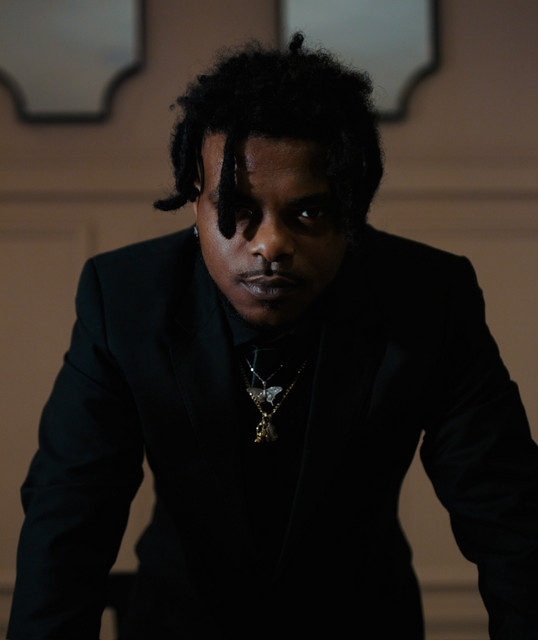
For Keyze AriZona, Christmas did not always arrive in December. In his FVTV interview, he describes a childhood when his family could not afford the biggest gifts during the holiday. Some relief came months later, when tax season made things possible. That delay became the title and emotional idea of his 2026 album, Christmas in Spring.
The Indianapolis rapper went a step further and made a companion narrative film. It follows two brothers trying to survive without parents to fall back on. Keyze says the story is loosely based on real experiences, with fictional details, rather than a literal reconstruction of his life. The distinction matters: the movie gives shape to the emotional truth without asking every scene to stand as fact.
In a 31-minute conversation with FVTV Media, he goes beyond release promotion to talk about what the movie cost to coordinate, why some proposed collaborations did not materialize, how live musicians influenced the songs, and why he believes Indianapolis has more talent than the industry regularly recognizes.
The name says AriZona. His story runs through Indianapolis.
Keyze tells FVTV that the AriZona in his stage name did not come from living in that state. A friend gave him the nickname years ago. His musical identity is rooted in the Indianapolis scene, where he connects his own development to artists, local showcases, and a wider creative community that deserves serious attention.
Asked about an Indiana musical Mount Rushmore, he considers names across genres rather than confining the conversation to rappers. His answers point to the influences and connections that can get lost when a city's music is reduced to a single sound.
Christmas in Spring is about getting something when you least expect it.
The phrase is more specific than a seasonal twist. Keyze explains that his family did not always have the resources for an ordinary Christmas, and that a tax refund later in the year could bring a feeling of celebration. The title holds both disappointment and relief. A holiday that arrived late was still meaningful.
The album is a 16-track release from June 5, 2026, and its companion film uses a pair of brothers to explore instability and the pressure of growing up without a safety net. The film is loosely autobiographical, Keyze says, but he is careful not to claim that every scripted event happened to him. He wanted the work to feel truthful without becoming a documentary.
His approach also links music to a visual narrative. The album and film are related pieces of the same larger story rather than interchangeable copies. The film's characters and performances let the music carry emotional details that would be difficult to explain in a single track.
A film needs more than one person's vision.
Keyze co-directed the companion project with Loagin Sneed. During the FVTV interview, he talks about a process full of people, conflicting schedules, and decisions that get harder once actors, locations, and a production team are involved. Making a film looked simpler from the outside than it felt on set.
Some ambitions had to be reduced to fit the available time and budget. He says certain characters and ideas could not all make it into the movie. That is the practical side of artistic control: deciding what survives when a full plan meets a finite production.
Keyze does not currently sound committed to a direct sequel. He leaves room for another film in the future but describes this particular story as a project that may stand on its own.
Collaborations are part chemistry, part logistics.
The album includes a feature from Chicago rapper Mick Jenkins on My Brother's Keeper. Keyze tells FVTV he approached the larger project with a wish list of artists. Some sessions or possibilities did not develop, because schedules failed to align or the music itself did not fit. He discusses other collaborations as possibilities rather than established recordings.
That distinction is important to a listener. A desired feature is not a confirmed feature, and a name on an early list is not an album credit. The interesting part of his explanation is how he decides whether the contribution works for the song rather than forcing a famous name into the tracklist.
The Sutherland Collective brings the music off the screen.
Keyze's connection with the Sutherland Collective expands the story beyond studio rap. He describes finding musicians through his circle and building a partnership that brought a live band into the music and performance strategy. The collective's musicians work across jazz, soul, and other forms that give his records a different shape on stage.
Live arrangements create disagreements as well as possibilities. Keyze says that he and the musicians sometimes differ over which songs make the setlist. Their shared goal is to give audiences a performance that works in the room, even when the record a rapper likes most is not the strongest live selection.
He hears an ongoing exchange between his rap instincts and the players' musical backgrounds. The point is not to use a band as a decorative upgrade; it is to let another set of ears change what a song can become.
Why one of his simplest questions found an audience.
Keyze also reflects on IF I WAS BROKE WOULD YOU STILL LOVE ME?, a record whose direct question traveled further than he expected. He points to the beat and the relatable lyrics rather than claiming to have known from the beginning that it would connect that way.
The song's success becomes another version of the larger theme: a listener may respond to an honest, uncomplicated question even when the artist's most ambitious work asks for much more time and attention. The same performer can have room for both.
Indianapolis has the artists. The connections still matter.
Near the end of the interview, Keyze talks about the local scene, community events including BUTTER, and how much serious work he sees from Indianapolis artists. He sees talent and ambition, but also the limits created by money and access to industry relationships.
His hope is to keep making music and films while building a career that can support him full time. Christmas in Spring shows the size of that ambition: an album, a narrative film, outside collaborators and a live performance approach all centered on one personal idea.
The project's strength is that a delayed childhood Christmas becomes more than a memory. Keyze uses it to ask how a person carries uncertainty forward and what it takes to build something durable after surviving it.
Watch the complete FVTV interview
KEYZE ARIZONA ON CHRISTMAS IN SPRING, THE FILM AND INDY MUSIC.
Keyze talks about the childhood story behind Christmas in Spring, directing its companion film, choosing features, working with live musicians and Indianapolis music.
Watch the interview on YouTube ↗