FVTV original interview ·
TYRINE THE ARTIST LEFT BATTLE RAP BEHIND. HIS STORIES GOT DEEPER.
The former Dakarai Spiritual tells FVTV how a 2010 crash, Navy memories and an eight-year writing pause reshaped his approach to music and faith.
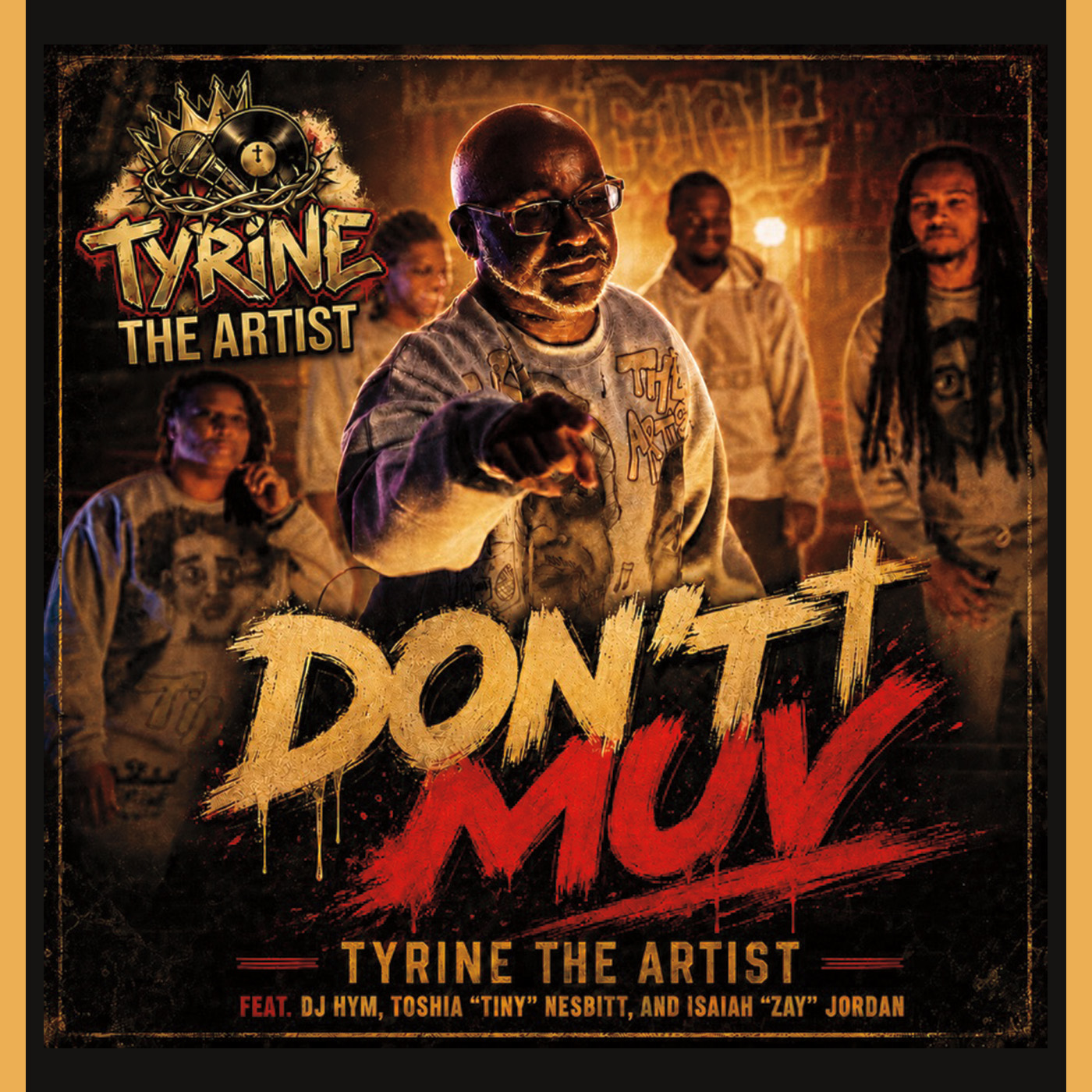
A name change might look like a marketing move. For Tyrine The Artist, it came after decades of underground hip-hop, Navy service, a highway crash and years when he says he could not write a new song.
The artist formerly known as Dakarai Spiritual sat down with FVTV Media on October 8, 2026. He traced the line between the battle rapper he was, the minister he became and the self-produced music he is releasing today.
His single 'Don't Muv' captures the principle that kept coming up: timing. Tyrine has spent years learning when to move forward, when to wait and when an old version of himself had run its course.
The battle rapper before the preacher
Tyrine dates his hip-hop beginnings to the early 1990s. He battled MCs in school, in the stairwells of the apartments where he grew up and later aboard a Navy ship. Writing lyrics while working in hot, cramped engineering spaces gave his verses a sense of urgency. Even when the bars were directed at an opponent, the feeling behind them came from his own experience.
His former rap name came from a book of African names that he and a friend consulted while forming a group. He became Dakarai Spiritual and used the name through years of underground releases and shows. By 2026, he said he wanted the confidence to use the name people already knew him by: Tyrine.
The crash that redirected his life
In 2010, Tyrine and his wife were returning toward Virginia after his stepfather's funeral in South Carolina. He told FVTV that he was adjusting a windshield-mounted GPS when traffic stopped on Interstate 95. He hit a vehicle ahead of him, triggering a multi-car collision. The car was totaled, he said, but neither he nor his wife suffered an injury.
Staying in a North Carolina hotel afterward, he questioned whether he was following the calling he believed God had placed on his life. He later left his music-degree path at Norfolk State University to study Christian ministry. He says he wrote no new songs for roughly eight years, until music returned to him in 2018. The pause, in his telling, changed his purpose as much as his sound.
A Navy memory that followed him home
Asked about references in 'Elapsed Time,' Tyrine recalled serving aboard the USS Nicholas when the USS Cole was attacked in Yemen. His ship had been headed toward the same region, he said, before receiving a diversion. He learned of the bombing later.
He also described a customer he met years afterward while working in Florida who identified himself as a survivor of the USS Cole attack. The encounter overwhelmed him. This is Tyrine's recollection of that period; he served on the USS Nicholas, not on the USS Cole. Its significance in the interview is how the memory became part of his writing.
Stories, even when the characters are fictional
Tyrine makes a distinction between lived events and the characters he uses to explore them. He described 'Transfiguration' as an imagined exchange with a minister who has lost his faith. He said 'The Sun's Arrival' was rooted in a personal relationship, while names and circumstances were adjusted in the lyrics.
He also traced elements of 'Logic' to his time in retail, where he questioned workplace pressure to move merchandise regardless of what customers actually needed. For him, writing is an outlet for experience, whether the result is a direct account or a story built around it.
Why he taught himself production
Tyrine's production work began because collaborators were moving more slowly than he was. After releasing his first album in 2005, he found himself waiting for other producers to finish the next one. He started making beats himself, developing an interest in sampling and the process of building a record from the ground up.
He draws a line between making an instrumental and producing a complete song. Production, in his view, means communicating a vision to collaborators, guiding vocal arrangements and making the different parts belong together. It is work he values because it lets him stay close to every decision.
Christian hip-hop should sound like its artists
Tyrine is skeptical of Christian rappers copying whatever style is popular at the moment. An artist who genuinely grew up in a particular sound can own it, he argued, but chasing a trend at the expense of identity is something else. His influences remain rooted in the lyric-heavy hip-hop he came up listening to.
He also pushed back on the idea that rap has an age limit. The listeners who grew up with artists like Black Thought are older now too, and they still want records that reflect adult lives. He wants hip-hop to make room for those stories rather than asking veteran MCs to sound younger than they are.
'Don't Muv' and the lesson of waiting
'Don't Muv' is Tyrine's argument for patience with the timing of a decision. In the interview, he recalled quitting a job to return to school and expecting veterans' education funding to arrive faster than it did. Bills piled up and his attempt to get rehired did not succeed. He now sees that episode as an example of moving before he was ready.
He discussed July and September 2026 listening sessions that informed his music and outlined tentative plans for more singles and albums. The release sequence can change. What remains consistent is his belief that a song should have a reason to exist. The craft that once helped him win a battle is still there. Tyrine is using it to tell different stories.