Independent music business ·
THE TICKETING MATH NEW PROMOTERS MISS.
A first-time promoter can fill a room and still lose money. Start with what one paid ticket actually covers.
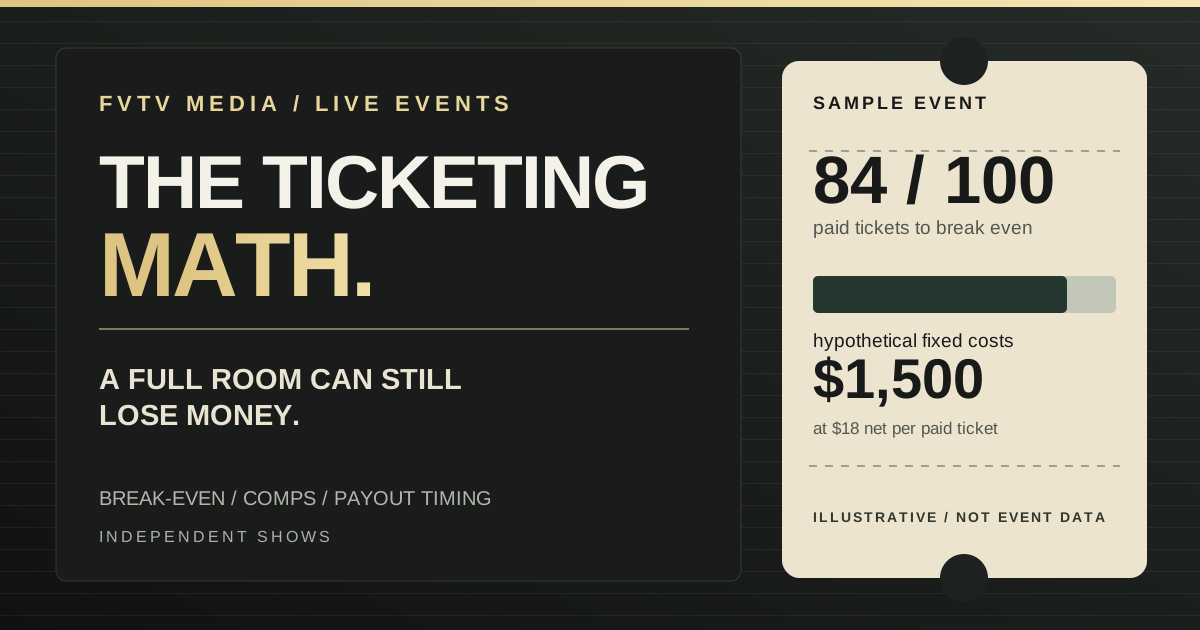
A first-time promoter can sell a decent number of tickets and still lose money. The trouble starts when ticket price gets treated as profit instead of one part of the event budget.
Venue rent, artists, sound, security, staffing, insurance, refunds and processing fees all want a piece before anybody gets paid. Even a sold-out flyer cannot tell you what actually cleared.
Before putting a show on sale, a promoter needs three numbers: what the event costs, how much each paid ticket contributes after the costs tied to that sale, and when ticket proceeds are available.
A $20 ticket isn't $20 of event profit
Take a $20 advance ticket. If the organizer absorbs the ticketing service fee, that deduction comes out of the organizer's sales proceeds. If the buyer pays the fee, the customer may see a checkout total above the advertised ticket price. In either case, venue and production expenses are still waiting.
Purplepass allows the promoter to choose between passing service fees to the customer and absorbing them, with additional facility-fee and tax settings. Its official fee-setting documentation explains both configurations.
Calculate net proceeds per admission using the actual platform terms and ticket mix. A fee arrangement that looks small on one ticket can change the break-even math across a whole room.
Break-even attendance is the number that matters
The basic equation is total unavoidable event costs divided by realistic net revenue per paid ticket. Round the answer up, because a fraction of a paid customer does not cover a full ticket.
For a hypothetical show with $1,500 in fixed event costs and about $18 remaining per paid ticket, break-even is 1,500 / 18 = 83.33. That means at least 84 paid admissions. These figures are an example, not an FVTV event budget or a quote of Purplepass fees.
In a room with 100-person capacity, 84 admissions is 84 percent of every available spot. That leaves only 16 places before the room is full. If the promoter wants 20 comps, that version of the plan cannot reach its break-even attendance even with every remaining ticket sold.
Paid presale should change the plan
A full comment section is not a presale report. Twenty-five paid tickets for a 200-cap show with a week remaining gives a very different risk picture than 140 paid tickets at the same checkpoint.
Set internal checkpoints at 30 days, 14 days, seven days and 48 hours. At each one, compare actual paid sales with break-even. Then decide whether to change the promotional approach, protect cash or avoid adding a new discretionary expense.
Purplepass's event statistics include ticket sales, attendance, distribution, box-office activity, marketing attribution, refunds and promo-code use. Those numbers are valuable only when they change a decision.
Every comp occupies paid capacity
Guest lists can make sense for artists, media, sponsors, staff and venue obligations. Still, an admission that costs the guest nothing takes one place out of the sellable capacity.
Write down the reason for every comp category and the number reserved for it. Run the break-even formula against the number of tickets actually available to paying buyers. Do not confuse attendance with revenue.
Purplepass offers guest-list and complimentary-ticket tools; the organizer still has to decide the capacity policy and settlement terms.
Track buyers instead of reposts
On a multi-artist bill, there is a difference between the person who fills the comments and the person whose audience buys tickets. Track completed sales by artist, promoter, partner and campaign instead of guessing from followers.
One workable approach is a unique tracking code per contributor. Purplepass documents codes used for attribution without necessarily discounting the ticket.
If an artist consistently brings paying customers, that is useful information for future billing, guarantees and promotion. If a placement brings attention but no conversions, the next investment deserves scrutiny.
Cash-flow timing can still sink a profitable show
A venue deposit may come due before a promoter receives a cent of settlement money. Artists or security may need payment on the night. A forecasted profit cannot pay a bill before cash arrives.
Purplepass's payout guide describes standard payouts following the event and separate options including eCheck, mailed check, direct deposit and certain organizer-controlled merchant accounts. Check the current agreement before relying on an exact transfer date.
Put expenses and expected payout dates on one calendar. Determine what has to be funded upfront, what can wait until settlement and whose money covers a gap if sales miss the target.
Write the split before doors open
A guarantee, backend percentage, door split and bonus all need written definitions. Decide which revenue counts, which expenses come out first, how refunds or taxes affect the total and who is authorized to approve adjustments.
The platform's accounting and event reports can document sales, discounts, fees and refunds. Reporting supports the agreed deal; it does not create the deal.
Afterward, preserve the numbers that improve the next show: paid sales, capacity, comps, average ticket revenue, costs, refunds, timing and which promotion sources actually moved buyers. A useful first show should leave behind a better budget for the second.
The promoter checklist is simple
Know the real capacity. Price the room. Calculate the break-even ticket count. Limit comps intentionally. Set paid-presale checkpoints. Give each collaborator a trackable path. Assign a person to run settlement and confirm payout timing.
Those are the numbers and responsibilities beneath the flyer. If they are missing, a busy room can still produce a loss.
Advertisement: FVTV Media may earn compensation from qualifying Purplepass referrals. This editorial math applies regardless of ticketing provider; compare each service against your own event costs and terms. Organizers can review Purplepass through FVTV's disclosed referral link.