FVTV original written interview ·
Jhon François François on Unity, Prejudice and the Purpose of Conscious Slam
In a nine-question written interview, the Belgian artist of Congolese heritage discusses care work, social division and the message behind “Même si on ne se ressemble pas.”
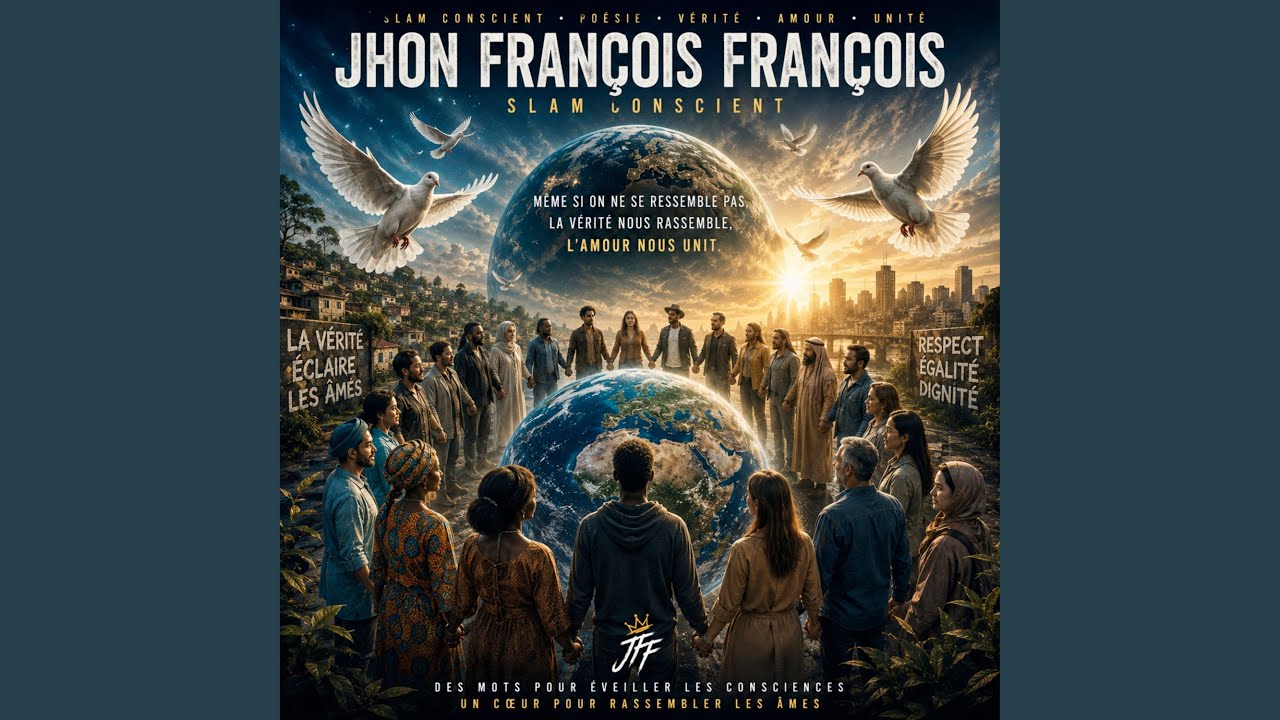
Jhon François François is a Belgian artist of Congolese heritage who uses slam, spoken word and hip-hop to speak about what happens when people judge one another by their appearance or background. His song “Même si on ne se ressemble pas” means “Even If We Don’t Look Alike.”
In a written exchange with FVTV on October 13, 2026, he connected the song to his work as a care assistant, his experience of cultural difference and his belief that music can make listeners question prejudice. He chose to answer our nine questions in writing. His complete responses appear below, with his original wording preserved.
What is the official release title, and why was that wording important?
The official title is “Même si on ne se ressemble pas,” which means “Even If We Don’t Look Alike.”
I chose this title because it expresses a message that is very important to me: we may have different skin colours, cultures, religions, languages and backgrounds, but we are all human beings.
Our differences should never become reasons to hate, reject or fight one another. I believe we should learn to look beyond appearances and recognise the humanity in every person.
For me, this song is a call for peace, respect, love and unity.
What moment in your own life made this message urgent enough to write about?
When I look at the world, I see too much division, racism, violence and suffering. I see people being judged because of their origins, their appearance or their social situation.
As a conscious slam artist, I feel the need to speak about these realities. I don't want to remain silent when people are suffering or when human dignity is being forgotten.
My music comes from my conscience and my observations of society. I want to encourage people to ask questions, reflect on their behaviour and understand that we all have a responsibility to make this world better.
I believe that change begins when we learn to listen to one another.
How have your Belgian and Congolese roots shaped your language, rhythm and point of view?
I am Belgian with Congolese roots, and both parts of my background are important to my identity.
My roots have helped me appreciate cultural diversity and understand the importance of respect between people from different backgrounds.
In my slam poetry, I use words to express my thoughts, emotions and convictions. My approach is sincere, direct and focused on the message I want to share.
I want my music to reach people regardless of their nationality or language. Even when we speak different languages, we can share the same emotions and understand the same fundamental values.
My message is universal: we are different, but we belong to the same human family.
Do you remember a conversation with somebody whose life was very different from yours that changed how you saw them?
My work as a care assistant has taught me a great deal about human dignity.
When you work with people who need care, you learn that every person has a story, a past, emotions and struggles that you cannot always see at first glance.
You learn to look beyond appearances and remember that every person deserves patience, kindness and respect.
This experience has strengthened my belief that we should never judge someone without trying to understand them first.
It has also influenced my music. I want people to see the human being before seeing a nationality, a skin colour, a religion or a social status.
How did you decide which words would be spoken and which would be sung or rapped over the instrumental?
For me, the message comes first.
Slam allows me to speak directly to the listener, almost as if I were having a conversation with them. I want my words to carry emotion and make people think.
Music and rhythm then help bring those words to life. Depending on the feeling I want to express, I use spoken word, rap or melodic elements.
I don't want the music to overshadow the meaning of the lyrics. I want the listener to hear the message, feel its emotion and remember what the song is trying to say.
My goal is to combine music and words in a way that speaks to both the heart and the conscience.
What response from a listener would tell you this song had actually changed somebody's thinking?
If someone told me that my song had helped them change the way they see another person, that would mean a great deal to me.
Perhaps the song would encourage someone to look beyond appearances, question a prejudice or show more kindness towards somebody they don't know.
I don't expect a song to change the entire world overnight. But if it helps even one person choose understanding instead of hatred, then I believe it has already made a difference.
For me, success is not only about the number of views or streams. It is also about the human impact of the music.
I want my songs to leave people with something positive to think about.
With immigration and social cohesion still major public debates in Belgium in 2026, what can a personal song accomplish that political arguments cannot?
Political debates can sometimes create divisions between people. Music offers another way to communicate, through emotion, personal experience and shared humanity.
A song cannot solve every political or social problem, but it can encourage people to listen and reflect without immediately feeling that they must oppose one another.
My song does not ask everyone to think alike. We can have different opinions, cultures and beliefs. What matters is that we respect one another and remember that every human being deserves dignity.
I want “Même si on ne se ressemble pas” to remind people that living together requires understanding, solidarity and a willingness to look beyond our differences.
For me, music is a way to build bridges where words alone sometimes create walls.
Where do slam and conscious hip-hop sit in Belgium's music scene today, and which artists are expanding that space?
Belgium has a diverse music scene, with artists working across hip-hop, rap, slam, spoken word and many other styles.
I believe conscious music has an important place because it allows artists to speak about real-life experiences, social inequality, identity, racism, peace and solidarity.
My own approach is to use music to raise awareness and encourage reflection. I want to show that hip-hop and slam can be forms of artistic expression that also carry meaningful messages.
I would like to see more opportunities for conscious artists, more collaborations between different cultures and more music that brings people together.
I am continuing to develop my own path as an independent artist, with the aim of reaching listeners in Belgium and internationally.
What will the next release explore, and where can readers hear the official recording?
My music explores themes that are close to my heart: humanity, peace, solidarity, dignity, hope and the importance of treating others with respect.
I want to keep developing my musical identity through conscious slam, spoken word, rap and different musical influences.
My ambition is to reach people from different countries and cultures because the messages I share are universal.
Readers can listen to “Même si on ne se ressemble pas” using the official links below.
YouTube – Official recording:
https://youtu.be/ubnSr9vrJ2s
Spotify – Official track:
https://open.spotify.com/track/0TM125N7XibGCkEiLGOxry
I also invite readers to follow my journey as an independent artist on social media.
Facebook:
https://www.facebook.com/share/1DjqnkGHaL/
Instagram:
https://instagram.com/jhon_francois_francois
TikTok:
https://www.tiktok.com/@jhonfrancoisfranc
My music carries a message of peace, unity, respect and humanity. Through conscious slam and spoken word, I want to encourage people to look beyond their differences and remember that we are all part of the same human family.
I hope that listeners who discover “Même si on ne se ressemble pas” will take its message with them and remember that our differences do not make us enemies.