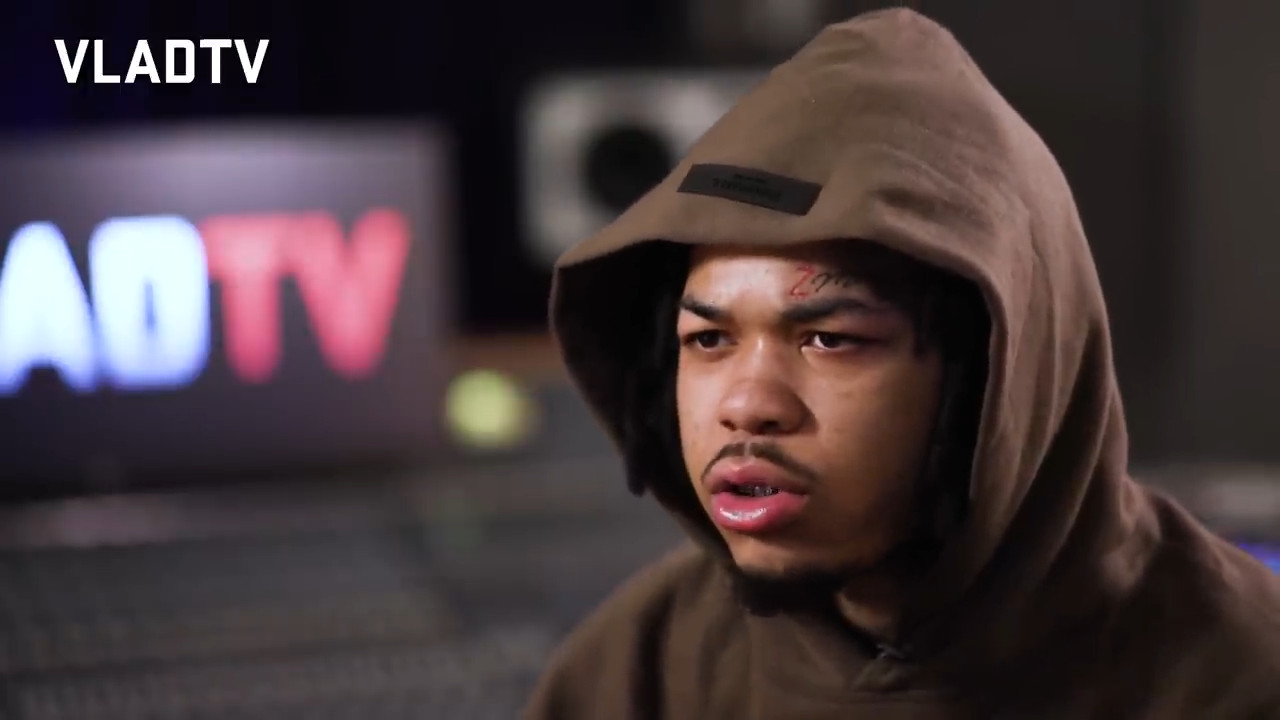
A month after BloodHound Q50 was ambushed at a Chicago gas station, people are still treating his death like an unfinished episode. Another man was killed after Q50's funeral. The old YFG Fatso feud is still being replayed. An October 11 livestream clip, presented online as Fatso talking about what happened to someone who involved his young daughter in a public dispute, now has viewers arguing over whether they heard a confession or a lyric.
Q50, born Mikquale T. Cooper, was 22 when six gunmen opened fire on him at a Fuller Park gas station on September 13, according to police-report-based reporting by the Chicago Sun-Times. The case was already bigger than one viral piece of surveillance footage. It has since become a test of what happens when street disputes, music marketing and an audience of amateur investigators collide.
The shooting that brought everything back
The Sun-Times reported that the six gunmen converged on Q50's white Tesla at a BP station at 4248 South Wentworth Avenue in the hours before sunrise on September 13. The report, based on initial police accounts and witness interviews, placed multiple masked people in cars that came to the gas station. Q50 died of multiple gunshot wounds.
Our original September investigation examined surveillance footage, conflicting early accounts, a bystander who said she tried to help and Q50's own pre-death interviews. This follow-up examines what the weeks after his death have exposed. Neither piece identifies a killer from rumors.
Another death after the funeral
On September 25, hours after Q50's funeral, 26-year-old Naseem D. Stevens, publicly known as Poohman, was shot and killed near a gas station in the 7500 block of South Cottage Grove Avenue. The Chicago Sun-Times' police-report-based account was summarized by XXL on September 30; other outlets reported that Stevens attended the funeral.
There were immediately theories about retaliation and whether the two shootings came from one coordinated conflict. There is no published police finding establishing that connection, and timing alone cannot identify a shooter or motive. What is documented is the second killing and how quickly a funeral became another focal point for rumors and mourning.
The YFG Fatso livestream sent the internet into detective mode
A short video posted to the Chicago-rap discussion forum Chiraqology on October 11 was labeled as YFG Fatso admitting involvement in Q50's death. Commenters circulated words they attributed to the video about someone who had played with a face and been killed. Some insisted the lyric referred to Q50 and Fatso's daughter; others argued Fatso was plainly singing or reciting part of a song rather than admitting to an actual killing.
The disagreement matters. FVTV located the public discussion and the clip as circulated but has not authenticated the full original livestream, obtained an independent complete transcript or established whether the line was part of a prewritten song. The person referenced by the words has not been independently identified. No verified police or court record examined for this article identifies YFG Fatso as an organizer, shooter or charged person in Q50's killing.
That means the viral label “confession” is a claim made by posters, not an established finding. Reporting that Fatso killed someone, ordered Q50's murder or “snitched on himself” as proven fact would jump past the evidence.
How a child became ammunition in a rap feud
Q50 and YFG Fatso had a well-publicized rap and social-media dispute before Q50 died. Among the episodes repeatedly cited by the audience were images and stories placing Q50 around Fatso's young daughter and the child's mother. That content provoked arguments about humiliation, respect and whether adults were pulling a child into a feud she did not choose.
This was already part of the public dispute, long before the October clip. But a feud that uses family imagery can take on a different weight after someone dies: viewers start rereading old posts as clues, and each new livestream becomes a test of whose side the audience believes.
Those social posts demonstrate that the artists were publicly at odds. They do not establish a criminal chain of events. The child deserves to remain outside any attempt to turn an internet accusation into a verdict.
Music, threats and the rush to name a winner
Chicago drill's defining tension is that the songs often emerge from real relationships and conflicts, while an audience sometimes treats every lyric as a police statement and every death as a scoreboard. That habit has become more intense with instant reposts, reaction streams, archived lives and YouTube clips stripped from their original chronology.
There is a difference between the public record and the story the algorithm wants: a dated homicide report can establish that a man was killed; contemporaneous footage may help reconstruct a scene; a verified interview may capture a person's actual words. A chopped livestream with a provocative caption cannot, by itself, determine who paid, planned or fired a gun.
This applies in both directions. Treating every boast as literal can falsely accuse a living person of homicide. Treating every remark as mere rap theater can also avoid legitimate questions about documented threats or the effects of publicly escalating conflicts. Serious reporting requires complete original recordings and independent corroboration, not whichever interpretation gets the most reactions.
What still needs answering
Investigators, not comment sections, will have to establish who killed Q50 and Poohman, whether there is any evidentiary connection between the cases and whether any social-media footage bears on those investigations. FVTV has not located a later verified police finding that resolves those questions as of October 13.
The larger story is what happened around both men: grief travels through the same feeds as diss clips, family members are pulled into public narratives, and a scene gets flattened into supposed victories before anyone in authority has made the evidence available.
Q50's life was more than the footage of his death. Poohman was more than the timing of his own. Chicago's latest rap conflict deserves reporting that remembers that difference, even while asking difficult questions of what the artists and their audiences put online.
Reporting cutoff: October 13, 2026, Pacific time. This story does not identify or accuse an individual of committing an uncharged homicide.
Sources and previous FVTV reporting
Chicago Sun-Times: police report and witnesses on Q50's September 13 killing
XXL: September 30 report on Naseem Stevens / Poohman's killing
Vice: September 29 report on Poohman's death
October 11 public livestream clip discussion; captions and commenters conflict about interpretation